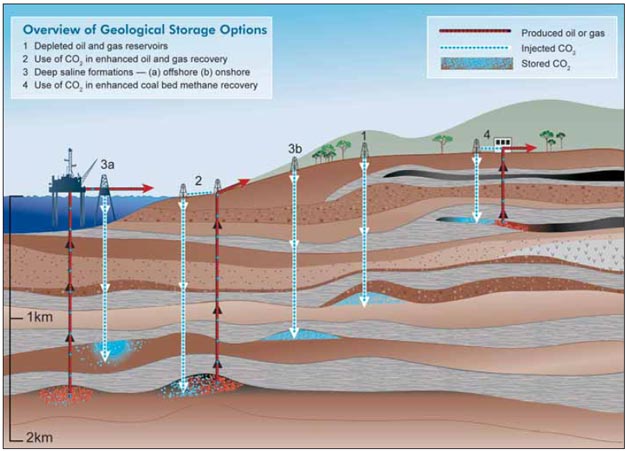
In the first lecture, Professor Andrew Palmer’s topic is about the technology and politics about carbon dioxide capture and storage. Start with the background of current global warming tendency, Prof. Palmer claimed the attitudes we should have and responses should be taken to face and tackle this climate change issue. Then in order to reach the goal of mitigating the global warming, Prof. Palmer proposed a solution by capturing and storing the emitted carbon dioxide on the seabed which he gave the relevant technique details and scientific principle to turn it possible. However, compared to the technical feasibility of this idea, the political problem encountered may be more difficult to deal with. The equality of responsibility shared, the political attitude and the distraction of current economic crisis may attribute to this technology’s less feasibility. Although carbon dioxide capture and storage is technical feasible to resolve the global warming issue, it is still a question whether it is best use of resources and optimal resolution.
 Retrived from: http://www.greenfacts.org/en/co2-capture-storage/images/fig-ts-07.jpg
Lecturer of second lecture, Mr. Sovacoot focused on using STS to address energy (and technology) problems. STS represents science and technology study which gives a social science systems approach to the new emerging technology. In his view, a new technology’s adoption is not only determined by its technical feasibility but sometimes more on the social factors such as culture, politics, economics and marketing. Thus STS provides a useful method to evaluate a new technology by considering it as part of a social system.
Last but not least, Professor Rajasekah Bala talked about the assessment and mitigation of climate change. He reviewed the evidence which showed the warming of climate and stated the potential consequences of global warming including increasing droughts and floods, extinction of creatures and intensive natural disasters. Then Prof. Bala talked about what we can do about global warming and difficulties in tackling like long-lasting effect, long-term political issue, problem in a global scale and not even spread of global warming impacts. However, we have two options to resolve this urgent global issue by drastically reducing GHG emission and develop strategies to reduce harmful impact. To reach this goal, Prof. Bala stated the role of government and individual in participation to end the lecture.
Three lectures all present their fantastic view on the relation between technology and global warming issue. It is interesting to mention the factors that impact the adoption of a new technology. In fact, it is not a difficult problem to develop any new technologies to tackle global warming issue. It is sometimes the political and social obstacles prevent the adoption and promotion of a new technology. However, these obstacles are not that hateful as they take account the social impact and cost to make the best use of the resources of society. Technology serves the human beings, and human beings obey the rule in human societies like laws and morality. It leads to what Mr. Sovacoot mentioned in the lecture, “Failure and acceptance of technology may have nothing to do with technical feasibility and relate to contests over power and interest.” This is a remarkable view for every engineer. When they are developing a technology to resolve specific problems, technical feasibility is not the only criteria for the success of a technology. As they are not develop “useless” technologies to the society, engineers have to consider the benefits and potential impact on the society, politics and culture, like morality, religions and marketing. Though engineer is not a politician, businessman or moralist, they sometimes have to think like a politician, a businessman or a moralist to evaluate their accomplishment.
Last but not least, Professor Rajasekah Bala talked about the assessment and mitigation of climate change. He reviewed the evidence which showed the warming of climate and stated the potential consequences of global warming including increasing droughts and floods, extinction of creatures and intensive natural disasters. Then Prof. Bala talked about what we can do about global warming and difficulties in tackling like long-lasting effect, long-term political issue, problem in a global scale and not even spread of global warming impacts. However, we have two options to resolve this urgent global issue by drastically reducing GHG emission and develop strategies to reduce harmful impact. To reach this goal, Prof. Bala stated the role of government and individual in participation to end the lecture.
Three lectures all present their fantastic view on the relation between technology and global warming issue. It is interesting to mention the factors that impact the adoption of a new technology. In fact, it is not a difficult problem to develop any new technologies to tackle global warming issue. It is sometimes the political and social obstacles prevent the adoption and promotion of a new technology. However, these obstacles are not that hateful as they take account the social impact and cost to make the best use of the resources of society. Technology serves the human beings, and human beings obey the rule in human societies like laws and morality. It leads to what Mr. Sovacoot mentioned in the lecture, “Failure and acceptance of technology may have nothing to do with technical feasibility and relate to contests over power and interest.” This is a remarkable view for every engineer. When they are developing a technology to resolve specific problems, technical feasibility is not the only criteria for the success of a technology. As they are not develop “useless” technologies to the society, engineers have to consider the benefits and potential impact on the society, politics and culture, like morality, religions and marketing. Though engineer is not a politician, businessman or moralist, they sometimes have to think like a politician, a businessman or a moralist to evaluate their accomplishment.